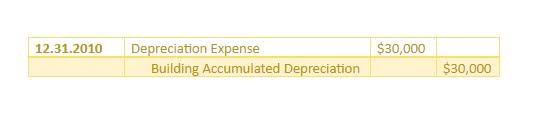
GAAP and IFRS are the most widely recognized accounting standards, and compliance is enforced through audits conducted by independent auditors. As accounting standards continue to evolve, it is important for businesses to stay up-to-date to ensure accurate HVAC Bookkeeping and consistent financial reporting. Debits and credits are used to record financial transactions in the general ledger. Debits represent the increase in assets or decrease in liabilities, while credits represent the increase in liabilities or decrease in assets. Accounts receivable and accounts payable are two important accounts that businesses use to track the money they owe and the money they are owed. Accounting operations refer to the day-to-day financial activities of businesses that involve recording, classifying, and summarizing financial transactions.
Equity Method of Accounting
Each state may also use a standard deduction format, but the amounts and computations differ from the federal and from state to state. If one taxpayer itemizes then the other is required to by law even if the married filing separate taxpayer is unknowing of what is included on the spouses separate return. A reason for this might be the prevention of pooling petty cash and duplication of deductions. Total amount of shares of stock that have been sold short and have not yet been repurchased to close out short positions.
AccountingTools

An accounting model that is based on the economic theory that profit will be greater when the difference between total revenue and TOTAL COST is the greatest. A DEBT that falls due more than one year in the future or beyond the normal OPERATING CYCLE, or that is to be paid out of noncurrent assets. ACCOUNTING method of valuing inventory under which the costs of the last goods acquired are the first costs charged to expense.
Auditing Standards
Credited to Luca Pacioli, this system established the basic accounting principles that are still in use today. As commerce expanded, so did the need for more structured financial reporting. The development of generally accepted accounting principles (GAAP) and the rise of professional organizations helped standardize accounting functions across sectors. Accountancy is the practice of recording, classifying, and reporting on business transactions for a business.
It is a means through which information about a business entity is communicated. Through the financial statements – the end-product reports in accounting – it delivers information to different users to help them in making decisions. Managerial accounting uses much of the same data as financial accounting, but it organizes and utilizes information in different ways. In managerial accounting, an accountant generates monthly or quarterly reports that a business’s management team can use to make decisions about how the business operates.
Managers use financial reports to evaluate the performance of the company and identify areas that need improvement. This information helps managers develop strategies to increase revenue, reduce costs, and improve profitability. Accounting plays a crucial role in the decision-making process of a business. In this section, we will explore the role of accounting in business decision making. Bookkeeping is an essential component of accounting operations, involving the recording of financial transactions in a systematic manner.
Accounting vs Bookkeeping
Their work can impact clients, companies, employees, boards, and investors. You can outsource your accounting work to outside professionals who specialize in bookkeeping and tax preparation. Outsourcing can offer many advantages because it allows you to take advantage of specialized skill sets that may not be available when hiring someone in-house. In accounting, you’ll come across certain titles which appear to bear similar duties but actually have unique job descriptions.
- Identifying, recording, and communicating financial information to end-users is the essence of accounting.
- The number of times a particular product is sold and restocked during a fixed period of time.
- Individual taxpayers who do not itemize their deductions are entitled to a standard deduction amount by which to reduce ADJUSTED GROSS INCOME in arriving at taxable income.
- We actually encounter or apply accounting in our daily lives – in budgeting, computing household expenses, checking bank balances, counting change, and many more.
- Standards set by the AMERICAN INSTITUTE OF CERTIFIED PUBLIC ACCOUNTANTS (AICPA) which concern the AUDITOR’S professional qualities and judgment in the performance of his or her AUDIT and in the actual report.
- Conditional bank commitment issued on behalf of a customer to pay a third party in accordance with certain terms and conditions.
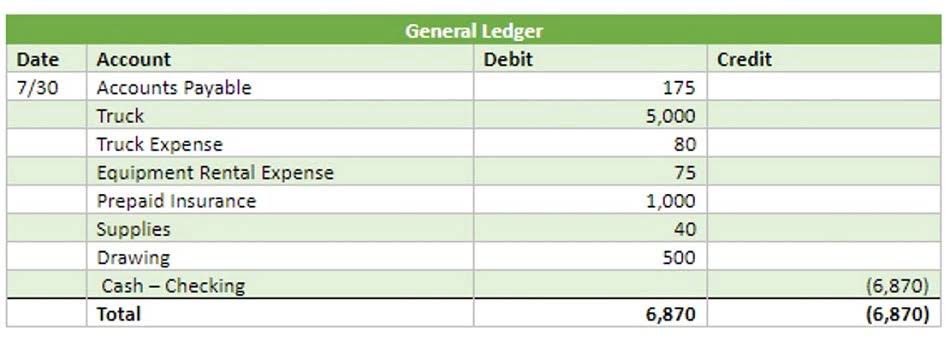
Any information that may be useful to management falls under this umbrella. The Alliance for Responsible Professional Licensing (ARPL) was formed in August 2019 in response to a series of state deregulatory proposals making the requirements to become a CPA more lenient. The ARPL is a coalition of various advanced professional groups including engineers, accountants, and architects.
- They are experts in financial reporting, taxation, auditing, and other areas of accounting.
- Financial reports are prepared in accordance with Generally Accepted Accounting Principles (GAAP) or International Financial Reporting Standards (IFRS).
- Public place where products or services are bought and sold, directly or through intermediaries.
- Generally speaking, what is accounting is actually the process or technique used to record, classify, and interpret financial information.
- Forensic accountants investigate financial information to find areas of fraud or misconduct, usually for law enforcement agencies.
- Equity represents the residual interest in the assets of a company after deducting liabilities.
- (ISO there is no payroll tax or withholding requirements for ISO’s) – If company mistakenly treats backdated stock as an ISO the company my fail to meet payroll tax and income tax withholding requirements.
Legal arrangement whereby the owner of a trade name, franchisor, contracts with a party that wants to use the name on a non-exclusive basis to sell goods or services, franchisee. Frequently, the franchise agreement grants strict supervisory powers to the accountancy franchisor over the franchisee which, nevertheless, is an independent business. Projecting the cash receipts and the cash payments for a future period. An INCOME STATEMENT that projects the NET INCOME of a business for a future period. A shipping term that means that the buyer bears transportation costs from the point of origin.
That is why I created the My Accounting Course accounting term dictionary. Financial accounting is the record-keeping leading to the preparation of annual financial statements (as described above). You may have heard of the terms financial accounting and management accounting.